BRRR Strategy Around the World: UK vs Dubai, US, Germany and Spain (2026)
BRRR is a financing pattern, not a universal formula. A market-by-market comparison of the UK, US, Dubai, Germany and Spain: refinance loan-to-value, transaction taxes, rent rules after works, and a worked example showing how much capital each market lets you recycle.

Quick answer: The BRRR strategy works best in the UK and the US because both markets let investors refinance onto a long-term mortgage at the new, higher value soon after a refurbishment. Dubai, Germany and Spain make BRRR harder: Dubai because off-plan payment plans replace the refinance and bank loan-to-value limits are lower for investors, Germany because rent rises after works are capped by law, and Spain because transfer taxes are heavy and tenant rules are strict. BRRR is a financing edge that depends on local lending, tax and tenancy rules, not a universal formula.
Why Compare BRRR Across Markets?
BRRR (Buy, Refurbish, Rent, Refinance, Repeat) is often taught as if it were a law of property investing. It is really a financing pattern that only works where four local conditions line up. If one is missing, the strategy slows down or stops recycling capital. Investors who spot Dubai buyers skipping BRRR entirely are noticing exactly this: the same strategy meets different rules in each country.
If you need a refresher on the basics first, read our guide to what the BRRR strategy is. This article compares how the BRRR strategy performs in the UK, the US, Dubai, Germany and Spain.
The Four Conditions a Market Needs for BRRR
- Forced appreciation is possible. There must be a supply of tired or under-managed stock that a refurbishment visibly lifts in value.
- Lenders value the finished property. A refinance only releases capital if a lender will lend against the post-works valuation, and for investors specifically.
- Refinancing is cheap and fast. Early repayment charges, valuation fees and registration fees all come out of the capital you hoped to release.
- Rent and exit costs are predictable. You need to be able to let the property at the rent your refinance was based on, and you should not lose a large slice to transaction taxes on the way in.
The UK: The Home Market for BRRR
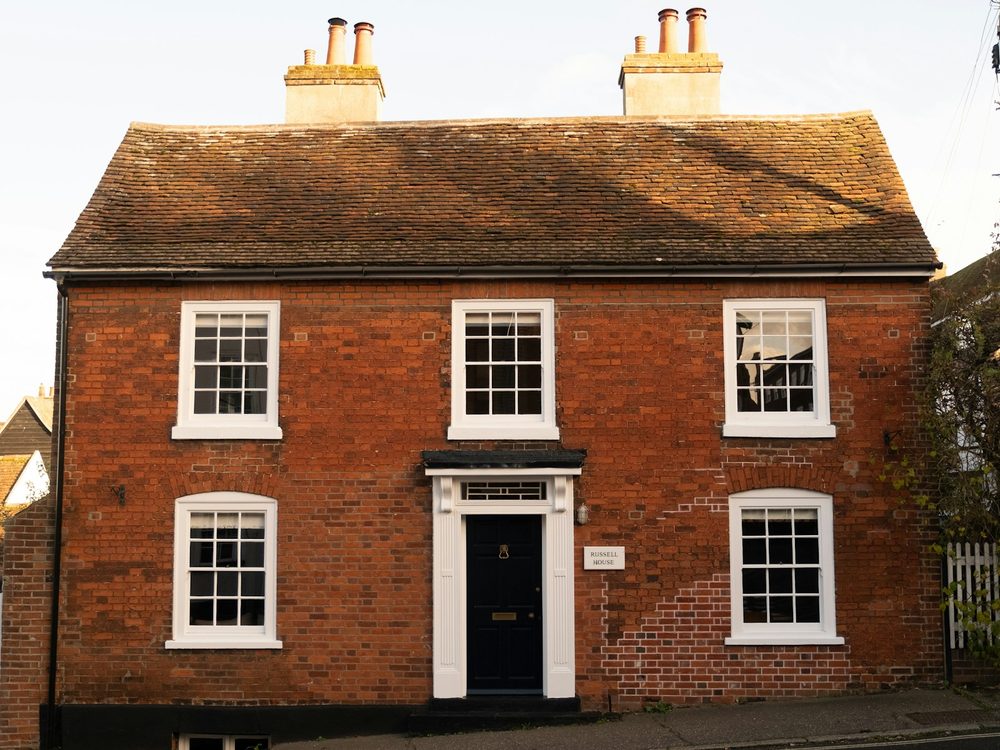
The UK ticks most boxes. There is a deep supply of older housing stock, auction lots and probate sales. A specialist bridging market funds properties that are not yet mortgageable. Buy-to-let lenders then refinance at up to around 75% of the lender's valuation, with the loan sized on rent through an interest cover ratio (ICR) test. See how bridging loans work and which lenders fund BRRR deals.
The UK costs are real, though. Buying an additional residential property attracts the higher rates of Stamp Duty Land Tax, a 5% surcharge on top of the standard bands (see our buy-to-let stamp duty guide). Bridging interest runs monthly, lenders often want the property let and a few months old before they refinance, and individual landlords are exposed to Section 24 mortgage interest restrictions. Tenancy law is also tightening under the Renters' Rights Act.
The result is still a BRRR-friendly framework: a cheap path to a long-term investor mortgage on the new value, with a well-understood lender market.
Dubai: Why BRRR Is Rare
Dubai is a strong investment market, but BRRR is not how most investors operate there. Several local features push buyers toward other strategies.
Off-Plan Payment Plans Replace the Refinance
Much of Dubai's investor stock is bought off-plan from developers. Buyers pay in instalments during construction, often with a small deposit and a plan that continues past handover. That structure gives leverage without a bank, so there is no distressed property to refurbish and no bridging loan to refinance out of. Capital is recycled by reselling the contract or the finished unit, not by a capital-raising refinance.
Less Forced Appreciation From Refurbishment
New-build and recently completed towers dominate. There is a secondary market where a refurbishment can lift value, but a smaller share of stock is genuinely run-down, so there is less room to buy far below value and refurbish upward.
Lower Loan-to-Value for Investors
UAE mortgage limits depend on residency, price band and whether the property is your first. Non-resident and second-property buyers are generally limited to a lower loan-to-value than the 75% a UK buy-to-let lender offers, and off-plan limits are tighter still. Check the current rules with your bank. A lower LTV means less capital released at refinance, so more stays trapped in the deal.
Transaction Costs Hit Every Cycle
The Dubai Land Department charges a 4% registration fee on a sale and a 0.25% fee to register a mortgage, on top of valuation, bank and agent fees. Repeating the cycle every year erodes the capital you are trying to recycle.
What Dubai Does Well
Dubai has no personal income tax on rent and no capital gains tax for individuals (company structures differ), which suits buy-and-hold and resale strategies. For the full Dubai comparison, read why Dubai investors rarely use BRRR.
The US: Where BRRRR Got Its Name
The US popularised the BRRRR label (with an extra R for rent). Its conditions are close to the UK's, and in some ways easier. Investors can use hard money or private loans to buy and renovate, then take a capital-raising refinance onto a 30-year fixed mortgage or a DSCR (debt service coverage ratio) loan underwritten on rent. Many programmes cap investor equity release at around 75% loan-to-value and require the borrower to have owned the property for several months, with a delayed-financing exception for outright purchases. Rules vary by lender and programme, so check current guidelines.
Friction is lower than in the UK because most states charge small transfer taxes and there is no equivalent of the SDLT surcharge. The trade-offs are annual property tax (a meaningful running cost in many states), landlord-tenant rules that differ widely by state and city, and rate risk on a large loan.
Germany: Stable Rents, Capped Upside
Germany offers stability, not BRRR. Transfer tax (Grunderwerbsteuer) ranges from 3.5% to 6.5% depending on the state, and notary, registry and agent costs add more. Mortgages are typically long fixed-rate loans, and banks lend against a conservative lending value, so a quick capital-raising refinance after refurbishment is unusual.
The bigger limit is rent. Rents in many cities are restricted by rent-brake rules, and the amount a landlord can pass on after modernisation is capped: under section 559 of the German Civil Code (BGB), 8% of eligible modernisation costs per year, limited to a few euros per square metre over six years. Forced appreciation through refurbishment therefore does not translate into a matching rent increase. Gains on property held for over ten years are generally tax-free for private owners, which rewards patient holding over quick cycles.
Spain: High Entry Costs and Strict Tenancy Rules
Spain has plenty of ageing stock and strong rental demand in coastal and major cities, so refurbish-and-hold is common. BRRR is held back by costs and rules. Purchase taxes on resale property (ITP) are set by region and commonly fall between about 6% and 10%, with stamp duty (AJD) and notary fees on top. Banks often lend lower percentages to non-residents, and the standard residential lease term is long, with rent controls in designated "stressed" zones such as parts of Catalonia. Evicting a non-paying tenant can be slow.
With heavy entry costs and limited ability to push rents, the spread you need between cost and post-works value is wider than in the UK or US.
Side-by-Side Comparison
| Market | Typical purchase friction | Investor refinance on new value | Rent flexibility after works | BRRR fit |
|---|---|---|---|---|
| UK | SDLT with 5% surcharge, legal fees | Yes, up to about 75% LTV, ICR on rent | Market rent on new tenancy; reform tightening | Strong |
| US | State transfer taxes, usually low | Yes, capital-raising refinance or DSCR loan, often about 75% LTV | Varies by state and city | Strong |
| Dubai | 4% DLD fee plus agent and bank fees | Possible, but lower LTV for investors | Regulated rent index for renewals | Weak (off-plan fills the gap) |
| Germany | 3.5% to 6.5% transfer tax plus fees | Rare; long fixed loans, conservative valuations | Rent brake and modernisation cap | Weak |
| Spain | Roughly 6% to 10% ITP plus AJD and fees | Possible, lower LTV for non-residents | Long leases; rent caps in stressed zones | Moderate to weak |
A Worked Example Across Markets
Take the same deal in each market: all-in cost of 150, post-works value of 200 (in your local currency, thousands). The only thing that changes is the loan-to-value a lender will offer on the new value. These LTVs are assumptions for illustration, and the figures ignore fees, taxes and rent.
| Market (assumed LTV) | Refinance loan | Capital recovered | Left in the deal |
|---|---|---|---|
| UK (75%) | 150 | 150 | 0 |
| US (75%) | 150 | 150 | 0 |
| Dubai (60%) | 120 | 120 | 30 |
| Germany (60%) | 120 | 120 | 30 |
| Spain (60%) | 120 | 120 | 30 |
A 15-point difference in LTV leaves 30 of your capital stuck in the deal, before any difference in fees or taxes. That gap is why "repeat" becomes slow outside the UK and US. Model your own numbers with the Deal Analyser and the stamp duty calculator.
What This Means for Investors
- Choose the strategy to fit the market. Where refinancing is expensive or capped, off-plan, buy-and-hold or refurbish-and-sell often beats BRRR.
- Check the refinance first. Before buying, confirm what an investor lender will actually lend on the finished value, and what it costs to get there.
- Count every round trip. High transaction taxes make repeated cycles expensive, which favours the UK and US over Spain or Germany.
- International investors can use the UK. Buyers from Dubai and elsewhere can access UK BRRR; our guide to international property investment in the UK covers the extra steps.
Frequently Asked Questions
Can you do BRRR in Dubai?
Technically yes, on the secondary market, but it is uncommon. Lower investor LTVs, 4% registration fees and the dominance of off-plan buying make it less efficient than in the UK.
Which country is best for the BRRR strategy?
The UK and the US are the strongest, because investors can refinance on the post-works value and recycle capital quickly. The best choice for you depends on your tax position, currency and where you can manage a project.
Is BRRR possible in Germany or Spain?
It is possible but less effective. Germany caps rent increases after modernisation and lends on conservative values. Spain has high purchase taxes and strict tenancy rules, which reduce the return on each cycle.
Why is the UK good for BRRR?
It combines a supply of below-value stock, a bridging market for unmortgageable properties, and buy-to-let lenders who refinance at around 75% LTV on the new value.
Is there tax to pay when you refinance?
Borrowing against a property is generally not treated as income in the UK, but tax treatment differs by country and personal situation. Take advice in each jurisdiction.
Should a Dubai buyer use off-plan instead of BRRR?
Off-plan payment plans suit investors who want leverage without a bank and are comfortable with construction and handover risk. BRRR suits those who want control over the refurbishment and a long-term rental. They are different risk profiles, not direct substitutes.
Key Takeaways
- BRRR is a financing pattern that relies on local lending, tax and tenancy rules.
- The UK and US offer the clearest route to refinance at the post-works value.
- Dubai replaces the refinance with off-plan payment plans, and investor LTVs are lower.
- Germany caps rent growth after modernisation; Spain has high entry taxes and strict tenancy rules.
- Always test the refinance and the round-trip costs before you buy.
This guide is for general information only and isn't financial, mortgage, legal or tax advice. Lending criteria, taxes and regulations change and differ by country and individual circumstances. Check current rules with qualified local advisers before investing.