International Property Investment in 2026: Singapore, USA, Thailand, Dubai, Spain and Japan Compared
Singapore charges foreigners 60% stamp duty, the USA taxes non-residents on rent, sale and death, and Thailand caps condo ownership at 49% per building. A destination-by-destination comparison of international property investment, plus six checks to run before you buy abroad.

Quick answer: International property investment looks simple from a distance, but each hot destination hides a different catch. Singapore charges foreigners a 60% Additional Buyer's Stamp Duty and yields around 3%. The USA has almost no ownership limits but taxes non-residents on rent, on sale (FIRPTA withholding) and on death. Thailand lets foreigners own condos only within a 49% building quota and land only on leasehold. Spain, Greece, Japan, Thailand and the USA each changed or tightened their rules in 2025-26. Before you buy anywhere, test six things: ownership rights, all-in entry cost, income tax on rent, tax on exit, estate and succession rules, and currency and financing risk.
Investors in London, Dubai and across the Gulf are asking the same question: where else in the world is worth buying property? Singapore for stability, the USA for scale, Thailand for lifestyle yields, Spain and Greece for residency, Japan for a weak yen. The headline numbers are easy to find. The rules that decide whether the deal makes money are not, and they changed again in 2025 and 2026 in several of these markets.
This guide compares the most-searched destinations for international property investment on the points that actually move returns: what a foreigner is allowed to own, what it costs to get in, how rent and sale are taxed, and what happens when the owner dies. It also shows where a UK investor, or an overseas investor buying in the UK, can use the same checklist. Where an official source exists we link it. Where we could only find law-firm or agent commentary, we say so, because rules in this area change quickly and the checks matter more than the headlines.

International property investment destinations at a glance
| Destination | Can a foreigner own? | Main entry cost | Biggest catch |
|---|---|---|---|
| Singapore | Private condos yes; landed homes need approval; public housing (HDB) no | 60% Additional Buyer's Stamp Duty (65% for entities and trusts) | Gross yields of roughly 3% do not cover the entry cost for years |
| USA | Yes, with no federal restriction; some states restrict certain nationalities | Closing costs and state taxes; foreign-national loans often need 25-35% down | Non-resident tax on rent, FIRPTA on sale and US estate tax |
| Thailand | Condos freehold up to a 49% building quota; land only by leasehold | About 2% transfer fee plus other taxes | Leasehold limits, nominee-company crackdown and weak exit liquidity |
| Dubai (UAE) | Yes, in designated freehold zones | 4% registration fee | Off-plan delivery risk and service-charge drag |
| Spain | Yes | Regional transfer tax, up to 13% in Catalonia | Golden visa abolished; a proposed 100% tax on non-EU buyers has not become law |
| Portugal and Greece | Yes | Transfer taxes plus fees | Residency-by-property routes closed or repriced |
| Japan | Yes, no ownership ban | Purchase taxes and agent fees | New reporting duties for foreign buyers and a possible future ownership bill |
Two rules of thumb run through every row. First, the cheapest-looking market is rarely the cheapest once taxes on rent, sale and death are counted. Second, residency-by-investment schemes that drove demand in Spain, Portugal and Greece are being closed or repriced, so any investment case built on a visa now needs a fresh check.
Singapore: stability at a high entry price
Singapore is the textbook safe haven, with strong property rights, a stable currency and deep legal certainty. It is also one of the most expensive places in the world for a foreigner to buy. The Inland Revenue Authority of Singapore (IRAS) lists a 60% Additional Buyer's Stamp Duty (ABSD) for foreigners buying any residential property, and 65% for entities and trusts, for purchases from 27 April 2023. That is charged on top of the ordinary buyer's stamp duty, and on the higher of price or market value.
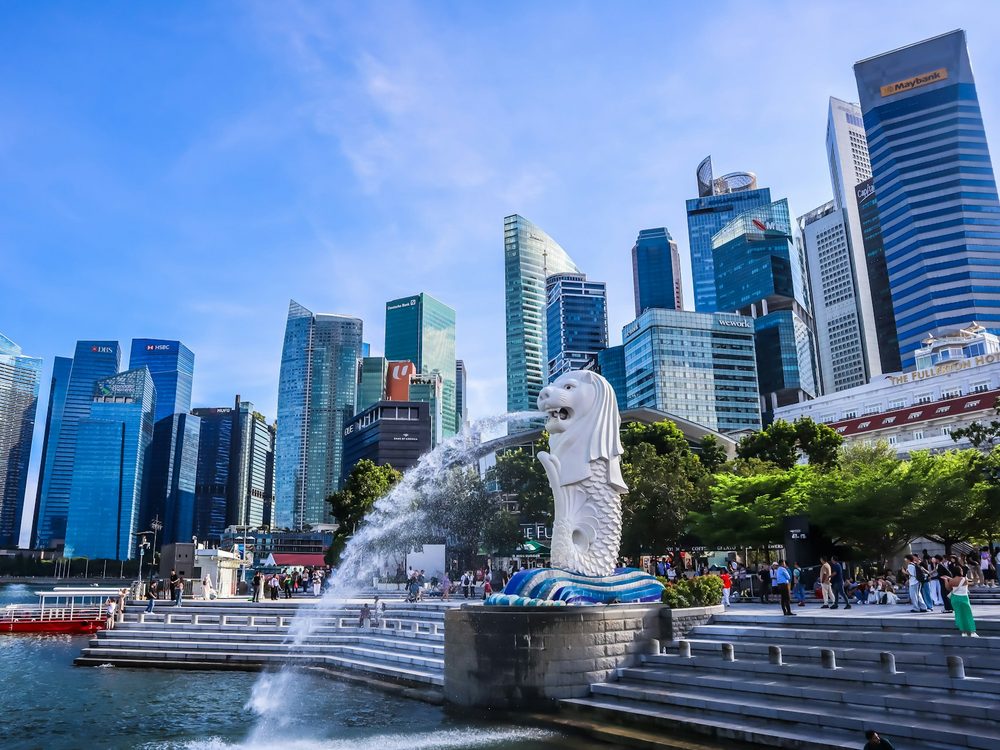
A quick example shows the scale. On a S$2,000,000 condo, a foreign individual pays S$1,200,000 in ABSD alone before the regular stamp duty, legal fees and agent costs. A property that rents for a gross yield of around 3% (agent surveys in 2026 put condo yields at roughly 2.9% to 3.8%, so treat the figure as indicative) earns S$60,000 a year in gross rent against that S$1.2 million entry cost. The investment case rests on capital growth, currency and wealth preservation, not on income.
What a foreigner can and cannot buy in Singapore
- Private condominiums and apartments: open to foreigners, subject to ABSD.
- Landed homes: require government approval and are rarely granted outside designated areas such as Sentosa Cove. Strata-titled landed homes inside condominium developments are generally open.
- Public housing (HDB flats): generally closed to foreigners.
- Commercial property: not subject to the residential ABSD, which is why some foreign investors look at offices and shop units instead.
- Free trade agreement remission: nationals of the USA, Iceland, Liechtenstein, Norway and Switzerland can qualify for ABSD at citizen rates, as IRAS explains in its FTA remission guidance.
Rental profit is taxed, and non-owner-occupied residential property carries a progressive property tax on its annual value, which several agent guides put at 12% to 36%. Bank loan-to-value limits for foreigners are set by regulation and have been reported inconsistently, so confirm the current cap with a Singapore bank before you commit. Singapore is a poor fit for any strategy that recycles capital, such as BRRR, because the entry tax cannot be refinanced away.
USA: open market, heavy tax on non-residents
The USA is the largest and most liquid market a foreign investor can reach, and there is no federal law stopping non-residents from buying residential property. The complexity sits in tax and state law, not in permission to buy.

Tax on rent
Rental income from US real property owned by a non-resident alien is taxed at a flat 30% of gross rent (or a lower treaty rate) unless the owner elects to treat it as effectively connected income, as the IRS explains for non-resident aliens with US real property. With the election, the owner is taxed on net profit after deductions at ordinary graduated rates. On $30,000 of gross rent and $18,000 of expenses, the default treatment withholds $9,000, while the net-basis election taxes only the $12,000 profit. That difference is why a US tax adviser matters before the first tenant moves in.
Tax on sale (FIRPTA)
When a foreign person sells US real property, the buyer must generally withhold part of the price under the Foreign Investment in Real Property Tax Act. The IRS sets out the rates on its FIRPTA withholding page: 15% of the amount realized above $1 million, and 10% where the price is between $300,000 and $1 million and the buyer will use the property as a residence. No withholding applies at or below $300,000 for a residence buyer. The withholding is an advance payment against the seller's actual tax, but it ties up money until the return is filed.
Estate tax
US real estate owned by a non-resident is a US-situated asset for estate tax. The IRS requires an estate tax return where such assets exceed $60,000, and the general rate scale rises to a top rate of 40% above a small exemption, so a modest property can create a large bill on death unless a treaty or a structure applies. See the IRS page on estate tax for non-resident non-citizens. This is the single most overlooked US cost for overseas buyers.
Financing and state rules
Foreign-national lenders typically ask for 25% to 35% down and size the loan on rental income (a debt service coverage ratio) rather than salary, according to terms published by specialist lenders. Treat those as one lender's published terms, not a market rule. Several states have also passed or proposed restrictions on property purchases by nationals of named countries, including a Florida law that has been in litigation, so check the state before you shortlist a city.
A federal reporting rule for non-financed purchases by companies and trusts (FinCEN's residential real estate rule) was reported as taking effect on 1 March 2026 and then vacated by a court, with an appeal pending. The status is disputed in secondary sources, so ask the closing agent what applies on your closing date.
For investors who want to recycle capital, the USA is the one market on this list where a capital-raising refinance cycle is realistic. Our worldwide BRRR comparison shows how the numbers differ from the UK.
Thailand: lifestyle market with ownership limits
Thailand attracts retirees, remote workers and holiday-let investors, but foreign ownership is tightly limited. Guides from Thai law firms agree on the core rules, though none of the sources we found is an official government page, so verify with the Land Department or a Thai lawyer.

- Condominiums: a foreigner can hold a freehold unit if foreign ownership stays within 49% of the building's total sellable floor area. Popular projects can exhaust the quota, leaving only leasehold.
- Land and houses: foreigners cannot own land outright. Leases are limited to 30 years, and a Supreme Court decision in March 2025 reportedly invalidated the long-used "30+30+30" renewal arrangement.
- Reform proposals: a 99-year leasehold and a higher condo quota of 75% have been discussed, but neither had been enacted as of mid-2026 in the sources we found.
- Nominee structures: using a Thai company held by nominees to own land is widely reported to be under tightened enforcement since late 2025. It is a legal risk, not a workaround.
- Funds and fees: buyers must show the purchase money was brought in from abroad in foreign currency, using a Foreign Exchange Transaction form from a Thai bank for larger transfers. The transfer fee is 2% of the appraised value, often split between buyer and seller, with stamp duty of 0.5% or Specific Business Tax of 3.3% falling mostly on the seller.
The practical point for an investor is exit liquidity. A smaller buyer pool, quota limits and leasehold terms that shorten as time passes all weigh on resale value, so model a conservative sale price, not just the rent.
Dubai and the UAE: freehold access and developer leverage
Foreigners can own freehold property in designated zones in Dubai, and a 4% registration fee is the main transaction cost. What sets Dubai apart is financing: developer payment plans let buyers recycle capital without a refinance, which is why the UK-style bridge, refurbish and refinance cycle is rarely used there. We cover the mechanics in why Dubai investors rarely use BRRR. The main risks are off-plan delivery delays, service-charge costs and a market that moves with oil, tourism and global sentiment.
Spain, Portugal and Greece: the residency-by-property era is ending
These three markets were popular because buying property could earn a residence permit. That pull has weakened:
- Spain: the golden visa was abolished on 3 April 2025, though existing holders keep their rights. A proposed 100% tax on property purchases by non-resident, non-EU buyers was announced but, according to law-firm commentary, has not become law and stalled in parliament. It has not been formally withdrawn, so the political risk remains. Regional transfer tax is high in some regions, up to 13% in Catalonia on a progressive scale, with a higher rate for large holders.
- Portugal: the property route to a golden visa was ended in the 2023 housing reforms, with limited rights for existing holders. Check the current status with Portuguese authorities before relying on older articles.
- Greece: the golden visa still exists but investment thresholds were raised in 2024 and now vary by area, from about EUR 250,000 to EUR 800,000 depending on location and project type. Government figures reported in 2026 show new filings falling sharply.
Japan: open ownership, new reporting rules
Japan has no law preventing foreigners from owning land or buildings, and rental yields in big cities are attractive against low borrowing costs, which is why it keeps appearing on shortlists. Recent changes are about reporting, not permission. Non-residents who acquire property must file a post-purchase report under foreign-exchange rules within 20 days, and agent and law-firm guides report that the exemption for buyers' own homes ended on 1 April 2026. A nationality declaration at registration is also being introduced for all buyers, and the governing coalition has pledged to draft a bill on foreign ownership. Treat the direction of travel as tighter, not looser.
How the UK compares
The UK is open to foreign buyers, but not cheap. Buyers who are not UK-resident pay an extra 2% on top of all other residential SDLT rates, including the higher rates for additional dwellings, as GOV.UK sets out for non-UK residents. Individuals can claim the surcharge back if they are present in the UK for at least 183 days in a continuous 365-day period within two years of the purchase. Rental profit is taxed here too, and the rules for individuals and companies differ. Our guide to international property investment in the UK covers financing without a UK credit footprint and managing a refurbishment from abroad, and the UK landlord tax guide covers the tax side.
Compared with Singapore's 60% entry tax or the US estate tax exposure, the UK's 2% surcharge is modest, and the refinance market supports capital recycling in a way Singapore, Thailand and Japan do not. That is the core of our approach: a managed UK refurbishment where a team handles compliance, finance and tenants for investors who live elsewhere. Our partnership page explains how that works.
Six checks before buying property abroad
- Ownership rights. Can a foreigner hold the title outright, on a quota, or only on leasehold? What happens if the rules change?
- All-in entry cost. Add stamp duty, registration fees, agent and legal fees, and any foreigner surcharge. Divide the total by annual net rent to see the real payback period.
- Tax on income. Is rent taxed on gross or net? Is there withholding? Does a tax treaty with your home country reduce it, and will you get credit for it where you live?
- Tax on exit. Capital gains tax, withholding at sale such as FIRPTA, and any seller's stamp duty for quick resales. Model the exit before you enter.
- Estate and succession. Local inheritance law, forced heirship, and any estate tax charged on foreign-owned property can decide who ends up with the asset.
- Financing and currency. Local loan-to-value limits for foreigners, the cost of borrowing in a foreign currency, and exchange-rate risk on both rent and sale proceeds. Our piece on cross-border mortgages and currency risk shows how a low headline rate can hide a larger loss.
Run the numbers with our rental yield calculator and Deal Analyser using the all-in cost, not the headline price, so the comparison between markets is fair.
Common mistakes in international property investment
- Comparing gross yields across countries. A 6% gross yield with 30% withholding and high service charges can net less than a 4% yield taxed lightly.
- Buying for a visa. Residency programmes have been closed, repriced or abolished within a few years. Never let a visa be the only reason a property stacks up.
- Using a nominee or workaround. Enforcement is tightening in several markets, and a defective ownership structure can leave you with nothing.
- Ignoring succession. Estate tax and forced heirship rules apply to the asset, wherever the owner lives.
- Trusting agent marketing. Developers and agents are paid on completion. Get independent tax, legal and survey advice in the country of purchase.
Frequently Asked Questions
Which country is best for international property investment?
There is no single best country. Singapore suits wealth preservation at a high entry cost, the USA suits scale and capital recycling but needs tax planning, Dubai suits leverage through developer payment plans, and the UK suits investors who want refurbishment-led growth with a managed process. The right choice depends on your tax residency, budget and time horizon.
Can foreigners buy property in Singapore?
Yes, but only private condominiums and apartments are broadly open. Landed homes need government approval, and public housing is generally closed. Foreign buyers pay a 60% Additional Buyer's Stamp Duty on residential purchases, with limited remission for nationals of certain free-trade partners.
Can foreigners own property in Thailand?
Foreigners can own condominium units freehold if foreign ownership in the building stays within 49% of the total floor area. They cannot own land outright, and leases are limited to 30 years. Check the building's remaining quota and take Thai legal advice before paying a deposit.
What is FIRPTA and who pays it?
FIRPTA is US withholding on the sale of real property by a foreign person. The buyer withholds 10% or 15% of the amount realized depending on price and use, and pays it to the IRS. It is an advance payment against the seller's actual tax, which is settled on a US tax return.
Do I pay US estate tax if I own a house in the USA as a non-resident?
Possibly. US real estate is a US-situated asset for estate tax, and a return is required when such assets exceed $60,000. Rates can reach 40%, so non-residents often use a tax-treaty position or a suitable ownership structure. Take advice before you buy.
Is the Spanish golden visa still available?
No. Spain abolished the golden visa for new applicants on 3 April 2025. Existing holders keep their rights. A proposed 100% tax on non-resident, non-EU buyers has not become law.
Does the UK charge foreign buyers extra?
Yes. Non-UK residents pay a 2% SDLT surcharge on top of other residential rates, including the higher rates for additional dwellings, and individuals can claim it back if they meet the 183-day presence test within two years of purchase.
Key Takeaways
- Every popular destination for international property investment has a different catch: Singapore's 60% foreigner stamp duty, US tax on rent, sale and death, Thailand's ownership limits, and shrinking visa-for-property schemes in southern Europe.
- Compare markets on all-in entry cost, net yield after tax and exit cost, not headline price or gross yield.
- Singapore is a wealth-preservation market; the USA is the main market where capital recycling works; Thailand's exit liquidity and ownership limits need conservative modelling.
- Rules changed in 2025-26 in Spain, Greece, Japan, Thailand and the USA, so check current law with a local adviser before relying on any article, including this one.
- The UK's 2% non-resident surcharge is small beside several competing markets, and a managed refurbishment can suit overseas investors who cannot be on site.
This article is general information, not financial, tax or legal advice. Tax and ownership rules differ by country, change often, and depend on your residency and circumstances. Where we cite law-firm or agent commentary instead of an official source we have said so; verify every figure with a qualified adviser in the country concerned before you commit.