Buying a Flat in a Building With Cladding Issues: Mortgages, Remediation and What Investors Should Check
Ten lenders will consider mortgages on flats in 11m+ buildings awaiting cladding remediation, if the paperwork is right. Here's how qualifying leases and the deed of certificate work, where the 2029 remediation targets and the new cladding Bill stand, and a pre-purchase checklist for investors.

Quick answer: You can buy, and often mortgage, a flat in a building with unsafe cladding in England, but only if the paperwork lines up. Ten lenders, including Barclays, HSBC, Lloyds, Nationwide, NatWest and Santander, have committed to consider mortgage applications on flats in buildings of 11 metres or more that are awaiting remediation, provided there is evidence the building is in a recognised remediation scheme, will be fixed by the developer, or the lease is protected under the Building Safety Act 2022, shown by a leaseholder deed of certificate. The single most important check for an investor is whether the lease was a qualifying lease on 14 February 2022: if it was, the protection passes to you, and you cannot be charged for unsafe cladding remediation.
Flats in buildings with unsafe cladding sometimes come to market at a lower price than similar flats nearby. Some are real opportunities. Others carry costs a lower price does not cover. This guide sets out how mortgages, leaseholder protections and the remediation timetable work in England in late 2026, and what to check before you buy a flat in a building with unsafe cladding.
How Many Buildings Are Affected?
According to the House of Commons Library's cladding remediation statistics briefing, MHCLG estimates that between 5,900 and 7,400 residential buildings of 11 metres or more in England have, or have had, unsafe cladding. At the end of August 2026, MHCLG was monitoring 4,724 of them in government programmes, and 38% had completed remediation. Of the 2,716 still to finish, 777 had started works and 1,939 had not.
Over half of the monitored buildings (53%) are in London. MHCLG estimates the mid-rise buildings in its programmes contain around 65,000 homes and the high-rise buildings around 185,000.
Can You Get a Mortgage on a Flat Awaiting Remediation?
Yes, in many cases. Under the UK Finance industry statement on cladding, lenders have been able to consider mortgage applications on flats in buildings of 11 metres and over in England since 9 January 2023. They need evidence of one of three things:
- the developer will remediate the building itself;
- the building is in a recognised remediation scheme (the Developer Remediation Contract, the Cladding Safety Scheme or the Building Safety Fund);
- the lease is protected under the Building Safety Act 2022, as evidenced by a leaseholder deed of certificate.
The original six signatories were Barclays, HSBC, Lloyds Banking Group, Nationwide, NatWest and Santander. Skipton, TSB and Virgin Money joined in December 2023, and Hodge Bank in March 2024. All lending is still subject to each lender's own policy, and the statement does not promise standard rates or cover every product. Buy-to-let appetite varies by lender, so ask a broker which lenders will take your specific building. Below 11 metres, the statement does not apply and each lender sets its own rules.
Is an EWS1 form still needed?
Sometimes. The EWS1 form was created in 2019 with a nominal five-year life. In an April 2025 update, the signatory lenders pledged not to require wholesale reviews of EWS1 forms older than five years, subject to their own policy. Some lenders no longer ask for an EWS1 form and accept other evidence instead, such as the building's Fire Risk Appraisal of the External Wall (FRAEW), inclusion in a remediation scheme, or a valid leaseholder deed of certificate. Our guide to buy-to-let mortgages covers the wider lending criteria.
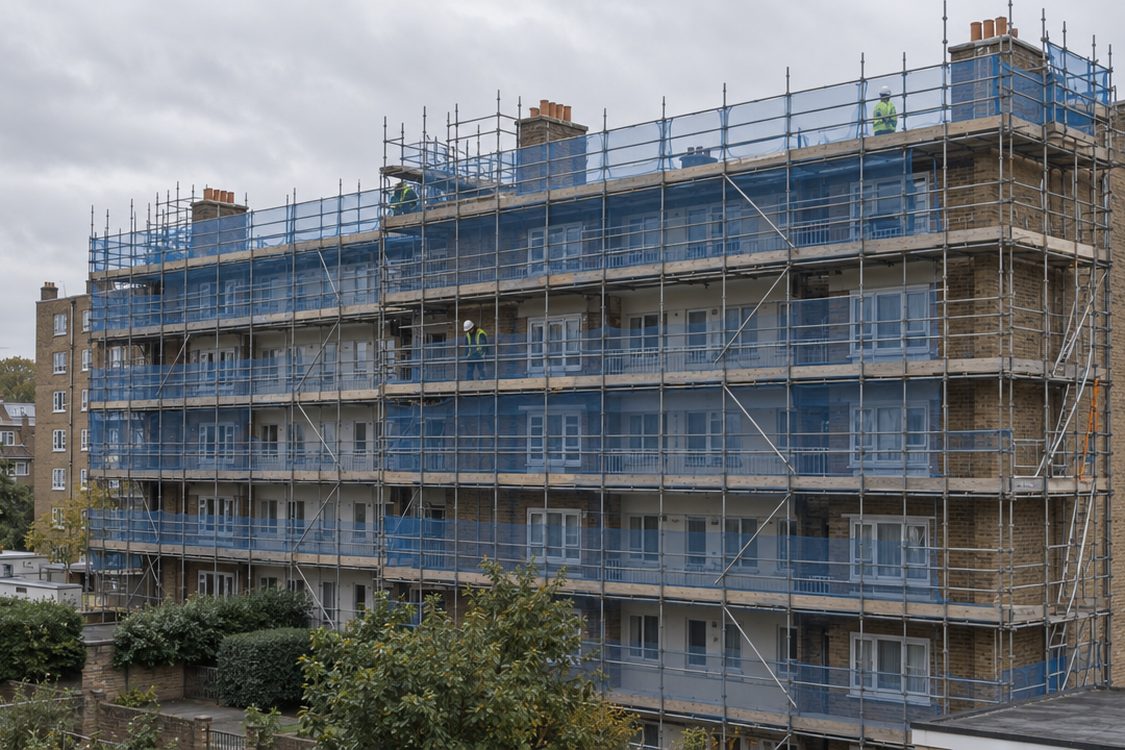
Building Safety Act 2022: Qualifying Leases and the Deed of Certificate
The Building Safety Act 2022 protects leaseholders in buildings of at least 11 metres or five storeys from historical building safety costs. How much protection a flat gets depends on whether it has a qualifying lease. Under the government's leaseholder protections guidance, a lease qualifies if, on 14 February 2022, the flat was the leaseholder's main home, or the leaseholder owned no more than three UK residential properties in total.
For an investor, the key line is this: the protections "automatically transfer to any future buyers". If the flat had a qualifying lease on 14 February 2022, you inherit that status, however many properties you own today. If it did not, buying it will not make it qualify.
The leaseholder deed of certificate is the document that shows whether a lease qualifies. The building owner then issues a landlord's certificate setting out what, if anything, can be passed on to leaseholders. It applies even without cladding: on our own Innes Gardens purchase in Putney, a five-storey block with no cladding, the landlord's certificate was not yet issued and a standard mortgage was ruled out at completion.
What qualifying and non-qualifying leases pay
| Cost | Qualifying lease | Non-qualifying lease |
|---|---|---|
| Unsafe cladding remediation | Nothing | Nothing if the building owner is linked to the developer; otherwise as per the lease |
| Non-cladding defects and interim measures (such as waking watch) | Capped, normally £10,000 (£15,000 in Greater London), spread over 10 years | As per the lease, unless the building owner is linked to the developer |
| Flat worth under £175,000 (£325,000 in London) on 14 February 2022 | Nothing | No low-value protection |
| Building owner group worth over £2 million per building | Nothing for historical defects | No protection from this test |
These rules come from the government's guidance on what leaseholders do and do not have to pay. The cap rises to £50,000 for flats worth over £1 million and £100,000 over £2 million. Protections also continue where a qualifying lease is extended or replaced.
The Remediation Acceleration Plan and the 2029 Targets
The Remediation Acceleration Plan update sets two targets for the end of 2029:
- every 18m+ residential building in a government funded scheme will be remediated;
- every 11m+ building with unsafe cladding will either have been remediated, have a date for completion, or its landlords will be liable for penalties.
A completion date is not the same as finished works, so some 11m+ buildings could still be awaiting remediation after 2029.
The Building Safety (Remediation of Unsafe Cladding etc) Bill
The government introduced the Building Safety (Remediation of Unsafe Cladding etc) Bill to the House of Commons on 14 October 2026. It had its second reading on 27 October 2026, and the Parliament bill page shows it at committee stage. It is not law yet. According to the government's guide to the Bill, it would:
- create a legal duty on the responsible entity (usually the freeholder) of buildings over 11 metres to assess the external walls and remediate in line with the FRAEW;
- require a FRAEW within 12 months of Royal Assent and, where works are needed, a published Remediation Compliance Plan within 15 months;
- allow prosecution, with up to two years in prison, or a financial penalty of up to £500,000 for responsible entities that deliberately fail to act;
- create a remediation backstop, letting a tribunal hand control of works to a public authority through a Remediation Management Order;
- set up a mandatory register of medium-rise buildings and make it easier to recover costs from cladding manufacturers.
Freeholders would not be able to pass penalty costs on to leaseholders, and existing Building Safety Act protections would continue. For a buyer, the Bill matters because it puts deadlines on stalled buildings, but those deadlines only start at Royal Assent.

Is a Flat in a Building With Unsafe Cladding a Good Investment?
It can be, but treat any discount as payment for risk, not free value. Our guide to below market value property explains how to test whether a discount is real. With unsafe cladding, the risks to price in are:
- Service charges: a non-qualifying lease can be charged for remediation under its terms, and even a qualifying lease can be charged capped sums for non-cladding defects and interim measures.
- Interim measures: costs such as waking watch fall under the cap for qualifying leases, but they still add to the bill.
- Insurance: ask for the buildings insurance schedule and premium history so you can see what is being charged.
- Resale and refinance: your exit depends on the next buyer's lender accepting the same evidence. A missing deed of certificate or stalled works can block a sale or a remortgage.
- Timescale: 1,939 monitored buildings had not started remediation at the end of August 2026. Works can take years.
Run the numbers with and without these costs in our deal analyser before you make an offer.
Pre-Purchase Checklist
- Building height and storeys: is it at least 11 metres or five storeys?
- The leaseholder deed of certificate: does it show a qualifying lease on 14 February 2022?
- The landlord's certificate: what does it say can be recharged?
- Remediation status: which scheme, what stage, and is there a completion date?
- EWS1 form or FRAEW: what exists, how old is it, and will your lender accept it?
- Service charge accounts and any demands for remediation or interim measures.
- Broker confirmation that a buy-to-let lender will lend on this specific building.
Frequently Asked Questions
Can a buy-to-let landlord have a qualifying lease?
Yes. A lease qualifies if, on 14 February 2022, the leaseholder owned no more than three UK residential properties, or the flat was their main home. Qualifying status then passes to future buyers, so an investor who buys a flat that qualified in 2022 gets the protection.
Do I pay for unsafe cladding remediation as a leaseholder?
Not if your lease is a qualifying lease. A non-qualifying lease is protected only if the building owner is, or is linked to, the original developer.
Which lenders lend on buildings awaiting remediation?
Barclays, HSBC, Lloyds Banking Group, Nationwide, NatWest, Santander, Skipton, TSB, Virgin Money and Hodge Bank support the UK Finance industry statement. Each still applies its own lending policy.
Is the cladding remediation Bill law?
No. It passed second reading on 27 October 2026 and is at committee stage in the House of Commons.
Key Takeaways
- Ten lenders support the UK Finance statement on lending on flats in 11m+ buildings awaiting remediation, subject to their own policies.
- The leaseholder deed of certificate is the key document: a lease that qualified on 14 February 2022 keeps its protection when sold.
- A qualifying lease pays nothing for unsafe cladding, and non-cladding costs are capped.
- Signatory lenders have pledged not to require wholesale reviews of EWS1 forms older than five years, and some accept a FRAEW instead.
- The Remediation Acceleration Plan targets the end of 2029, and the new Bill is at committee stage.
- Price in service charges, interim measures, insurance and resale risk before treating a discount as good value.
This article is general information about building safety and mortgage lending in England as at October 2026, not legal, tax or financial advice. Leaseholder protections depend on the facts of each lease and building, and the remediation Bill may change before it becomes law. Take advice from a solicitor and a mortgage broker before buying a flat in a building with unsafe cladding.